
道場TOP ネタ一覧 shoppq道場
Crosscall Trekker M1: It’s Not Smart, But It’ll Get You Home
- ◇評価 0ポイント
- ◇閲覧回数 151回
- ◇登録日
- 2026年9月8日
-
- aline
- 道場主
Lv.23
I spent three days hiking through the rain in Western Sichuan with the Crosscall Trekker M1. Before we set off, a companion glanced at the dark, chunky device in my hand and asked with a laugh, "Are you taking a landline phone on a hike?" Three days later, standing at a 4,000-meter mountain pass with a smartphone that had no signal, he waited anxiously for me to use that "landline" to radio the campsite and let them know we were safe.
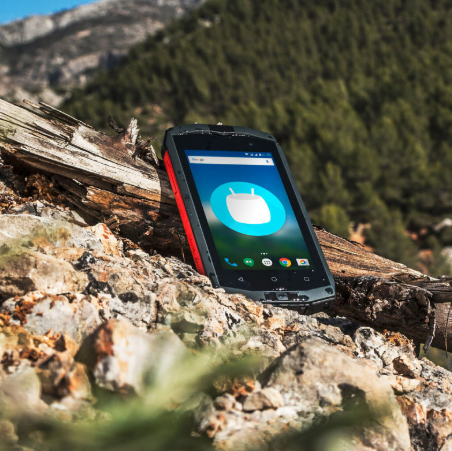
I have to admit, it isn't exactly a looker. It has a small screen, thick bezels, and raised buttons like an old-school calculator; it feels heavy in the hand—like a brick wrapped in soft rubber. Yet, it was precisely that unfashionable bulkiness that gave me a sense of security for the first time while walking through the damp pine forest. The rain started in the morning—not the kind of city rain that drifts down briefly before stopping, but a dense, relentless downpour that seemed to soak the entire wilderness through to the core. When I pulled it out of my shell jacket pocket, the screen was caked in mud and the earpiece was splattered with water. While my companions instinctively tucked their phones away against their bodies, I simply squatted by a stream, swished the device in the water, wiped it dry with my sleeve, and kept walking.
Crosscall is a brand rarely mentioned in China, and I didn't have high expectations when I bought it. What drew me in wasn't the technical specs, but the massive flashlight button on the side. In the wild, a flashlight is a hundred times more important than a camera. If there’s a noise outside your tent at night, you don’t need to see exactly who—or what—it is; you just need a beam of light bright enough to keep the fear at bay. The M1’s light is harsh and focused, like a spotlight, cutting a sharp edge through the fog. I dislike "rugged" phones designed to look like luxury items—they’re too pristine; you hesitate to get them dirty. The M1 is different; it seems born to be covered in mud.
I barely gave charging a thought during those few days. I’d answer the occasional call during the day, set an alarm at night, and toss it into an outer pocket of my backpack whenever we reached camp. By the time we hiked out on the third day, I still had two bars of battery left. My companions' smartphones had long since required power banks just to stay alive, and some had even turned off location services and music to conserve power. I suddenly realized that simplicity is a privilege. There are no app stores, no short-form videos, and no barrage of random notifications. You can only make calls, send texts, and listen to the radio. Yet, it is precisely this lack of features that allows you to refocus your attention on the slippery stones beneath your feet, the dewdrops on pine needles, and the mountain pass gradually coming into view in the distance.
As for signal reception, it often outperforms smartphones that cost several times as much. I’m not sure if it’s the antenna design or something else, but at a bend in the canyon—where other people’s phones showed "No Service"—this device could still manage a choppy, intermittent call. It was a strange feeling, like an unassuming, old tool suddenly proving its worth. It didn't rely on algorithms or raw computing power to transmit a voice; instead, it depended on something more primal and stubborn.
Of course, it isn't for everyone. After returning, I swapped my SIM card back to my everyday phone and tucked the M1 into the drawer of the entryway shoe cabinet, alongside spare shoelaces, a headlamp, and a sleeping pad. Its screen resolution is pitifully low, its photos are barely more than snapshots, and typing requires repetitive key presses—much like a stubborn old man. Yet, whenever I head into the mountains, to the riverside, or to places where I wouldn't bring a laptop or smartwatch, I always slip it into my pocket. It gives me peace of mind—not because it’s powerful, but because it never pretends to be.
Some tools are meant for showing off; others are meant for getting the job done. The M1 belongs to the latter category. It isn't smart or stylish, nor does it make you look cool. But when you’re soaked to the bone, stranded, and your fingers are stiff with cold, it’s still there: a satisfying *click* of the button, the screen lighting up to show you still have power and a signal—and that you can still make it home.
|
|
【キーワード】
登録されていません
|

|
  |

|
ブログ? そんなの必要ありません! 今日から、いきなりアフィリエイトスタート!
【まにあ道アフィリエイト】まにあ道ならAmazonアソシエイトIDを利用してネタを書くだけで、お気軽に始めていただけます。


-

-
 Musings on the Infinix X624/HOT7: Why do people still buy a phone that doesn't even have 4G?(0)
aline
(道場主)
Musings on the Infinix X624/HOT7: Why do people still buy a phone that doesn't even have 4G?(0)
aline
(道場主)
-
-
Musings on the Infinix X624/HOT7: Why do people still buy a phone that doesn't even have 4G?(0)
aline
(道場主)





 シュリのおすすめネタ
 この道場の人気ネタ
-
New Battery Tablet PC Batteries FUJITS... -
New battery UTL-3478110-2S 4000mAh/29.... -
New Battery Surveying Equipment Batter... -
Fujitsu Lifebook U727: 12.5 inches, 1.... -
New Battery Ni-MH Batteries VARTA 1.2V...
このネタをソーシャルブックマークに登録する
 まにあ道の人気ネタ
-
VIVO B-O1 handy akku 4420mAh/17.10WH 3... -
糖分の摂取量に関してはお子様が口にするお菓子の管理が必要となります -
Tijdelijke aanbieding Intermec CN51 Ve... -
惜しい凡作「ひとひら」 -
New Battery Tablet PC Batteries FUJITS...
コメントはまだありません。